Lalitha Sahasranamam, a revered Hindu text, details 1,000 names of Goddess Lalitha Tripura Sundari.
Numerous English PDF versions with meanings are readily available for devoted study and practice.
What is Lalitha Sahasranamam?
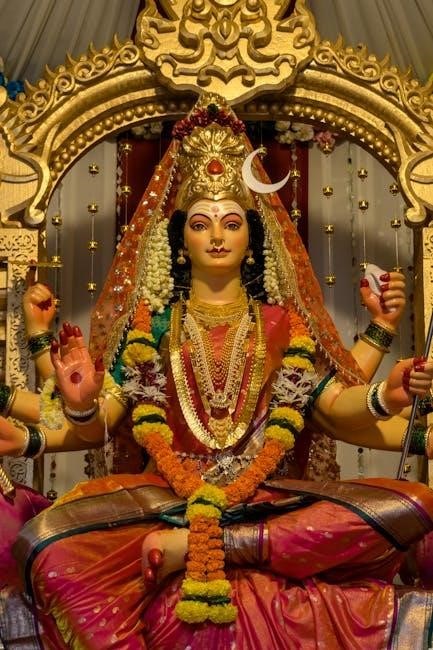
Lalitha Sahasranamam is a sacred hymn, a stotram, dedicated to Goddess Lalitha Tripura Sundari, representing the divine feminine power – Shakti. It comprises 1,000 names (sahasra) that beautifully describe the Goddess’s various attributes, forms, and glories. These names aren’t merely labels but are potent mantras themselves, each resonating with specific energies and qualities.
Many seekers utilize Lalitha Sahasranamam English PDF versions, often including transliteration, word-by-word meanings, and comprehensive explanations. These resources facilitate deeper understanding and effective recitation (japa). The text is considered a powerful tool for spiritual growth, fulfilling desires, and attaining liberation. It’s a core text within Sri Vidya tradition, offering a pathway to connect with the divine mother.
Significance and Benefits
The Lalitha Sahasranamam holds immense significance as a potent spiritual practice. Reciting these 1,000 names is believed to bestow numerous benefits, including peace of mind, prosperity, and protection from negative energies; It’s considered a direct pathway to connect with the divine feminine and receive Her blessings.
Accessing an English PDF with meanings allows practitioners to understand the nuances of each name, amplifying the benefits of recitation. Regular japa is said to purify the mind, enhance intuition, and accelerate spiritual evolution. Scholars like Udaya Bhaaskar Bulusu have extensively analyzed the text, revealing its profound philosophical depth. The stotram aids in fulfilling desires (cintitaphalāvaptyarthē) and achieving overall well-being.
Historical Context and Origins
The Lalitha Sahasranamam originates from the Brahmanda Purana, specifically within the Lalita Parameshwari chapter. Its precise dating remains debated, though it’s considered ancient, likely composed centuries ago. The text is deeply rooted in Tantric traditions and the worship of the Divine Mother, Lalitha Tripura Sundari.
The stotram’s transmission occurred primarily through the oral tradition, passed down through lineages of gurus. The availability of English PDF versions today facilitates wider access to this sacred text. It’s often found within collections like the Stotra Nidhi and Prabhata Stotranidhi. Understanding its historical context enriches the practice, connecting devotees to a rich spiritual heritage and the wisdom of past masters.
The Structure of the Sahasranamam
Lalitha Sahasranamam consists of 1,000 names, organized into chapters called padas. Studying an English PDF reveals this structured arrangement for focused recitation.
Number of Names (Sahasra)
The term “Sahasranamam” itself signifies “thousand names,” indicating the core structure of this sacred text. Lalitha Sahasranamam meticulously lists 1,000 names, each a potent descriptor of the Divine Mother, Lalitha Tripura Sundari. These aren’t merely labels, but vibrational frequencies embodying Her multifaceted glory. Accessing an English PDF version allows devotees to delve into the nuances of each name, understanding its deeper significance.
The sheer number isn’t arbitrary; it represents the completeness and infinite nature of the Goddess. Each name unveils a different aspect of Her power, beauty, and compassion. Studying these names, often through resources like translated PDFs, is believed to unlock spiritual insights and facilitate a profound connection with the Divine. The systematic presentation of these names is key to the stotra’s efficacy.
Organization into Chapters (Padas)
The Lalitha Sahasranamam isn’t presented as a single, continuous list. Instead, it’s skillfully organized into five distinct sections known as “Padas” (chapters). This structured arrangement enhances the meditative flow and facilitates focused contemplation on specific attributes of the Goddess. Many English PDF versions maintain this traditional organization, aiding in systematic study.
Each Pada focuses on a particular aspect of Lalitha’s divine form and power. This division allows devotees to progressively deepen their understanding. Accessing a well-formatted PDF with clear chapter divisions is crucial for proper recitation and absorption of the stotra’s essence. The Padas build upon each other, culminating in a holistic appreciation of the Goddess’s magnificence, making the text accessible and meaningful.
The Role of the Guru
Traditionally, the Lalitha Sahasranamam is considered best learned and practiced under the guidance of a qualified Guru. A Guru provides initiation, clarifies the subtle meanings of the names, and ensures correct pronunciation – vital for the stotra’s efficacy. While English PDF translations offer accessibility, they cannot replace the personalized instruction of a spiritual teacher.
The Guru transmits the appropriate upadesha (instructions) and helps navigate the intricacies of the associated rituals like Anganyasa and Karanyasa. Studying a PDF alongside a Guru’s guidance allows for a deeper, more authentic experience. The Guru’s presence fosters devotion and unlocks the transformative potential of this sacred text, ensuring correct understanding and practice.
Key Deities and Concepts
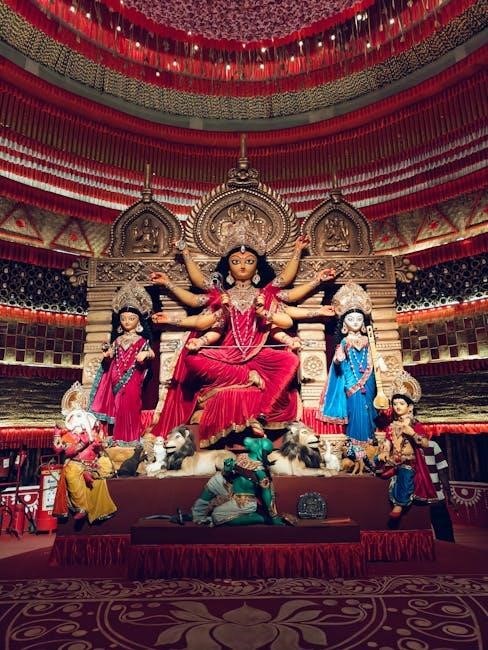
Lalitha Tripura Sundari, the Divine Mother, is central to this text. Understanding Sri Chakra and the dynamic interplay of Shakti and Shiva enhances comprehension, even with an English PDF.
Lalitha Tripura Sundari – The Divine Mother
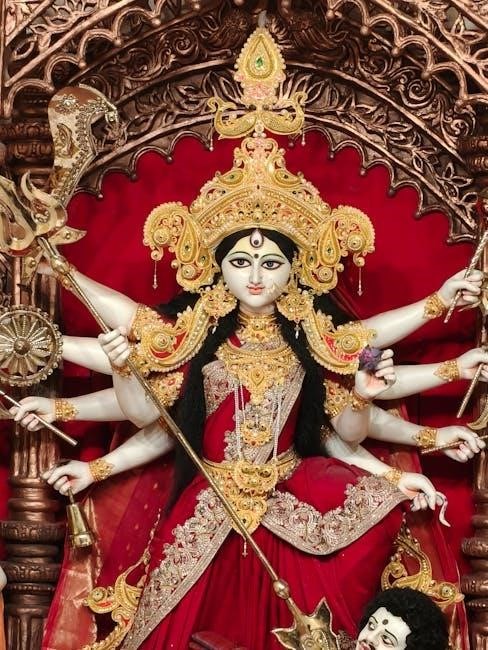
Lalitha Tripura Sundari embodies the supreme divine feminine power, Shakti, and is the central deity within the Lalitha Sahasranamam; She is often visualized with a radiant, reddish hue – “Sinduraruna vigraham” – as described in the Dhyanam section.
Her thousand names, detailed in readily available English PDF versions, aren’t merely epithets but reveal her multifaceted nature and cosmic functions. She represents beauty, power, and auspiciousness. Studying these names, even through translation, allows devotees to connect with her divine energy.
The text portrays her as the ultimate reality, the source of creation, preservation, and dissolution. Accessing an English PDF with meaning unlocks a deeper understanding of her significance and the profound spiritual benefits of reciting her names.
Sri Chakra – The Cosmic Diagram
The Sri Chakra is a complex geometric diagram representing the cosmos and the divine energy of Lalitha Tripura Sundari. It’s intrinsically linked to the Lalitha Sahasranamam, serving as a visual representation of the goddess’s thousand names and their interconnectedness.
Understanding the Sri Chakra enhances the practice of reciting the Sahasranamam. Many English PDF resources dedicated to the text include diagrams and explanations of the Chakra’s symbolism. Each element within the Chakra corresponds to specific names and qualities of the goddess.
Devotees often visualize the Sri Chakra during Dhyana (meditation) while reciting the names, deepening their connection. Studying an English PDF with detailed Chakra explanations unlocks a richer, more profound understanding of this sacred geometry and its role in spiritual practice.
Shakti and Shiva – The Divine Couple
The Lalitha Sahasranamam beautifully portrays the inseparable union of Shakti (the Divine Feminine) and Shiva (the Divine Masculine). Lalitha Tripura Sundari is Shakti, the dynamic energy that animates the universe, while Shiva represents pure consciousness.
This divine couple’s relationship is central to understanding the Sahasranamam’s philosophy. The names often describe Shakti’s power and grace, manifested through her union with Shiva. Many English PDF versions emphasize this duality, explaining how both energies are essential for creation and liberation.
Studying commentaries within an English PDF, like those by Udaya Bhaaskar Bulusu, reveals how each name reflects aspects of this sacred partnership. Reciting the Sahasranamam honors both Shiva and Shakti, fostering balance and wholeness within the devotee.
Understanding the Names
Each ‘Nama’ in the Lalitha Sahasranamam is a sacred descriptor of the Goddess. English PDF resources detail these names, categorized by qualities and benefits.
Meaning of ‘Nama’ – A Sacred Name
The term “Nama” within the Lalitha Sahasranamam transcends a simple name; it embodies the very essence and energy of the Divine Mother, Lalitha Tripura Sundari. Each name isn’t merely a label but a potent manifestation of Her infinite qualities and powers. Studying Lalitha Sahasranamam with an English PDF reveals that these names are considered sacred vibrations, capable of invoking Her grace and blessings.
These names aren’t arbitrary; they are meticulously chosen to represent various aspects of the Goddess – Her beauty, strength, compassion, and cosmic functions. Reciting these names, understanding their meanings (as provided in English PDF translations), and meditating upon them is believed to facilitate a deeper connection with the Divine. The names act as keys, unlocking spiritual insights and leading to self-realization. They are considered mantras in themselves, possessing inherent transformative power.
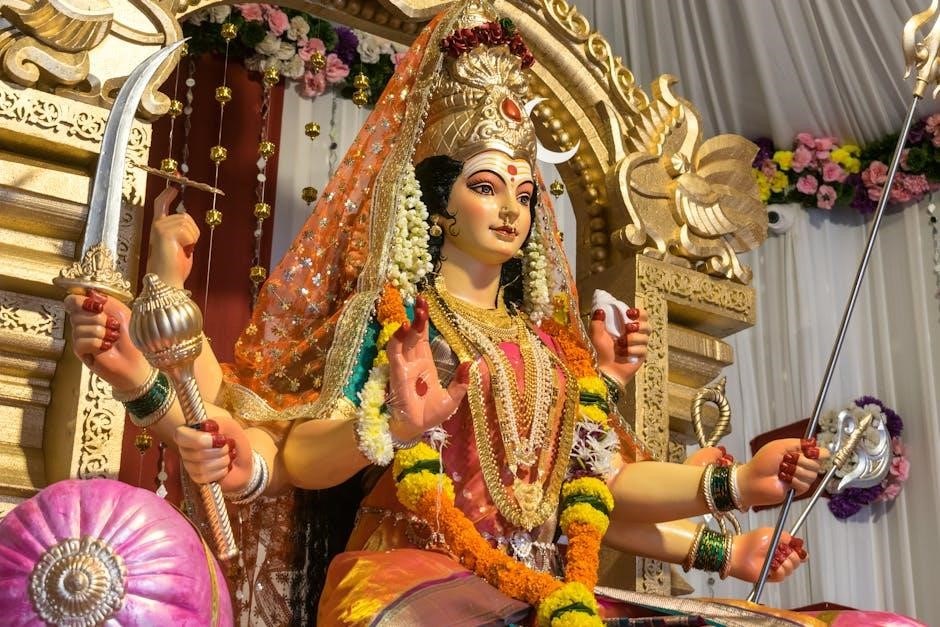
Categorization of Names (Based on Qualities)
The Lalitha Sahasranamam’s 1,000 names aren’t randomly listed; they’re thoughtfully categorized based on the qualities they represent. Studying an English PDF reveals groupings reflecting aspects like Her form, attributes, cosmic functions, and relationship with the universe. Scholars like Udaya Bhaaskar Bulusu detail these classifications, aiding comprehension.
Names describe Her physical beauty, spiritual power (Shakti), and role as the ultimate reality. Some names focus on Her association with Sri Chakra, the sacred diagram representing cosmic energy. Others highlight Her compassionate nature and protective qualities. Accessing an English PDF with detailed explanations allows devotees to appreciate the nuanced categorization, deepening their understanding of the Goddess’s multifaceted nature and the profound wisdom embedded within the stotram.
The Importance of Recitation (Japa)
Recitation, or Japa, of the Lalitha Sahasranamam is considered profoundly powerful. Many seeking spiritual growth utilize readily available English PDF versions to facilitate practice. The text states japē viniyōgaḥ, indicating intention is key during recitation, aiming for desired outcomes like peace and fulfillment.
Each name (Nama) is a sacred mantra, vibrating with divine energy. Consistent recitation is believed to purify the mind, remove obstacles, and awaken inner potential. Studying an English PDF alongside practice enhances understanding and devotion. The benefits extend beyond spiritual growth, potentially impacting health and well-being. Devotees often combine Japa with Dhyana (meditation) for a deeper connection with Lalitha Tripura Sundari.
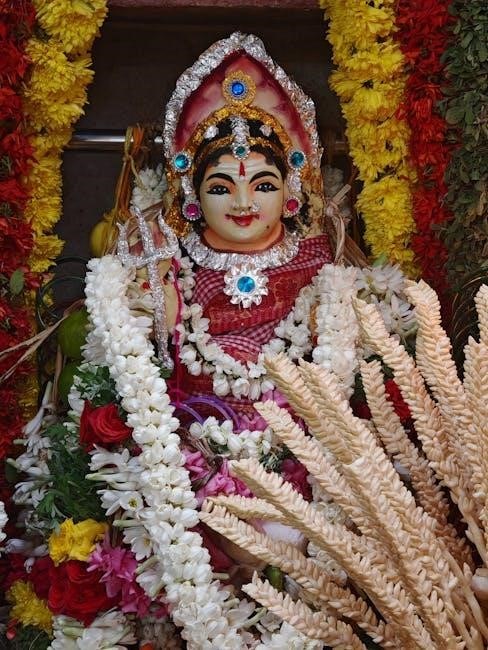
Resources for Study and Practice
Lalitha Sahasranamam English PDF versions are widely accessible online, alongside translations and commentaries by scholars like Udaya Bhaaskar Bulusu and Sw. Vimalananda.
Lalitha Sahasranamam English PDF Availability
Fortunately, accessing Lalitha Sahasranamam in English is remarkably easy thanks to the proliferation of digital resources. Numerous websites offer downloadable PDF versions, often including transliteration, word-by-word meanings, and comprehensive translations. These resources cater to both beginners and advanced practitioners.
Several online platforms host printable e-books of the Sahasranamam, facilitating convenient study and recitation. The availability of these PDFs allows devotees to engage with the sacred text regardless of location or time constraints. Furthermore, many versions include the original Sanskrit text alongside the English translation, aiding in pronunciation and deeper understanding.
Dedicated websites and spiritual communities frequently provide curated collections of these PDFs, ensuring authenticity and accuracy. This widespread availability promotes the practice and appreciation of this powerful stotram.
Online Translations and Interpretations
Beyond PDF downloads, a wealth of Lalitha Sahasranamam translations and interpretations are accessible online. Websites dedicated to Hindu scriptures provide detailed explanations of each of the 1,000 names, exploring their etymological roots and symbolic significance. These resources often present multiple interpretations, acknowledging the nuanced layers of meaning within the text.
Scholarly articles and forums offer in-depth analyses, drawing upon traditional commentaries and modern perspectives. Several platforms feature audio recitations accompanied by English translations, aiding in correct pronunciation and comprehension.
Devotees can find interpretations that emphasize different aspects – philosophical, devotional, or tantric – catering to diverse spiritual inclinations. These online resources collectively foster a deeper understanding and appreciation of the Goddess’s divine attributes.
Commentaries by Scholars (Udaya Bhaaskar Bulusu, Sw. Vimalananda)
Scholarly commentaries significantly enhance understanding of the Lalitha Sahasranamam. Udaya Bhaaskar Bulusu’s encyclopedic work delves into the Sri Chakra’s symbolism and the names’ intricate meanings, offering a comprehensive analysis. His interpretations connect the names to broader tantric and philosophical concepts.
Sw. Vimalananda’s translations, often available alongside English PDF versions, provide a more accessible approach, focusing on devotional aspects and practical application. His commentaries clarify complex verses and offer insights into the Goddess’s various forms.
These scholars’ works are invaluable resources for serious students, bridging the gap between ancient tradition and modern understanding, enriching the experience of reciting and contemplating the sacred names.

Practical Application & Rituals
Lalitha Sahasranamam practice involves Anganyasa and Karanyasa, alongside Dhyana on the Goddess. PDF guides detail proper Jape viniyogaḥ.
Anganyasa and Karanyasa
Anganyasa and Karanyasa are fundamental preparatory rituals before reciting the Lalitha Sahasranamam. These involve the symbolic placement of the Goddess’s energy within the body and hands, respectively. The mūlamantrēṇāṅganyāsaṁ karanyāsaṁ ca kuryāt phrase emphasizes their importance.
Anganyasa purifies and empowers the body, while Karanyasa prepares the hands for offering and ritual gestures. Detailed instructions, often found within Lalitha Sahasranamam English PDF guides, outline specific mantras and corresponding body parts. These practices are believed to establish a sacred connection with the Divine Mother, enhancing the efficacy of the recitation and fostering a deeper meditative state. Correct execution, as described in commentaries, is crucial for optimal results.
Dhyana (Meditation) on the Goddess
Dhyana, or meditation, is a vital component of Lalitha Sahasranamam practice. It involves vividly visualizing Goddess Lalitha Tripura Sundari, fostering a profound connection. The dhyānam section, often included in Lalitha Sahasranamam English PDF resources, provides a detailed description for focused contemplation.
The commonly recited Om Sinduraruna vigraham… verse paints a radiant image – a red-complexioned Goddess with three eyes, adorned with jewels, and holding a sugarcane bow. This visualization isn’t merely imaginative; it’s a means to invoke Her presence. Many PDF guides emphasize consistent practice to deepen this meditative experience, unlocking inner peace and spiritual insight. Scholars like Udaya Bhaaskar Bulusu highlight the transformative power of focused Dhyana.
Mantra Usage and Intention (Jape viniyogaḥ)
Jape viniyogaḥ refers to the proper intention and method for reciting the Lalitha Sahasranamam mantras. The phrase “mama śrīlalitāmahātripurasundarī prasādasiddhidvārā cintitaphalāvāptyarthē japē viniyōgaḥ” outlines the purpose: achieving desired results through the grace of Goddess Lalitha.
Many Lalitha Sahasranamam English PDF guides detail the correct pronunciation and sequence. Recitation, or japa, is most effective when coupled with sincere devotion and a clear intention. Resources often recommend preliminary rituals like Anganyasa and Karanyasa to purify the body and mind. Understanding the meaning of each name, readily available in translated PDF versions, enhances the meditative quality of the japa, fostering a deeper spiritual connection.
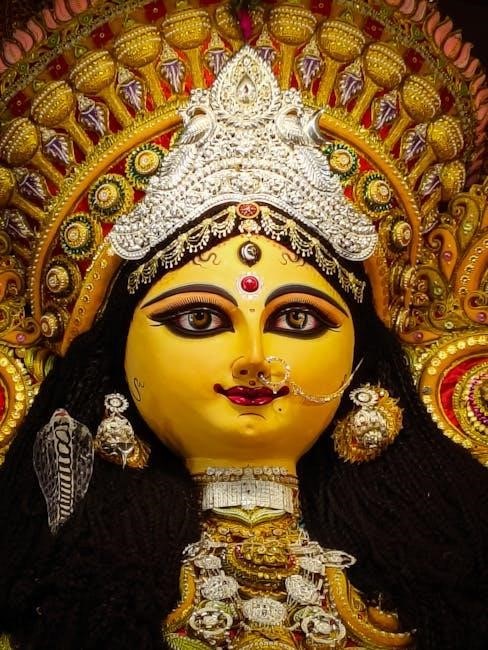
Notable Stotras Related to Lalitha
Lalita Stava, alongside Ganga, Bhavani, and others, complements the Lalitha Sahasranamam. English PDF translations aid understanding of these related hymns.
Lalita Stava
Lalita Stava, a significant hymn dedicated to Lalitha Tripura Sundari, holds a prominent place alongside other stotras like Ganga Stava and Bhavani Stava. It’s considered a vital companion to the Lalitha Sahasranamam, offering a focused devotional experience. Many devotees explore both texts to deepen their connection with the Divine Mother.
Fortunately, resources for studying Lalita Stava are abundant. Several websites and publications provide English PDF versions, often including transliteration, word-by-word meanings, and comprehensive explanations. These resources are invaluable for those seeking to understand the hymn’s poetic beauty and spiritual significance. Accessing these translations allows practitioners to engage with the stotra’s verses and unlock its profound wisdom, enhancing their spiritual journey.
Ganga Stava, Bhavani Stava, and Others
Alongside Lalitha Stava, a collection of other powerful stotras complements the devotion inspired by the Lalitha Sahasranamam. These include the Ganga Stava, Bhavani Stava, Gayatri Stava, Kali Stava, Lakshmi Stava, and Sarasvati Stava, each dedicated to different aspects of the Divine Feminine. Studying these hymns enriches one’s understanding of the broader cosmic energies represented within the Sahasranamam.
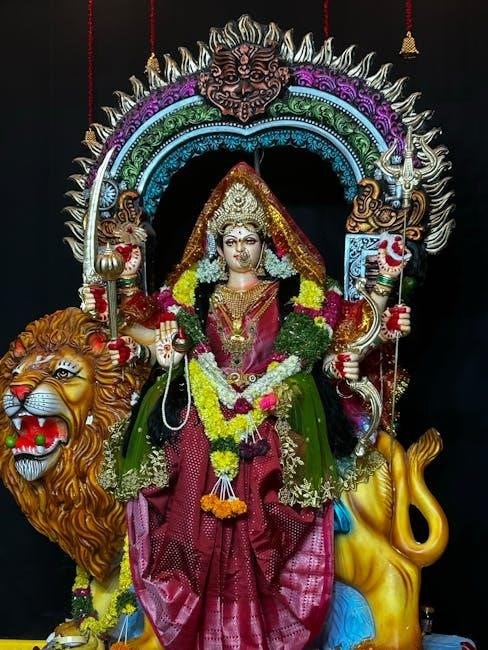
Fortunately, many of these stotras are available in English PDF format with detailed meanings. This accessibility allows devotees to explore the diverse expressions of the Goddess and deepen their spiritual practice. Resources often provide transliteration and translations, making these ancient texts approachable for modern learners, fostering a more profound connection with the divine.